Salmon Fishing Lake Ontario: Chinook vs Coho Explained


 Published: Nov 28, 2026
 7 min read
Summary
A plain-spoken comparison of Chinook and Coho salmon for anglers new to Lake Ontario. It covers how to tell them apart, how each one fights and why people chase them, from a Point Breeze charter captain's view.
Ask a few anglers what they love about salmon fishing Lake Ontario has to offer, and the answer usually comes back to two fish: Chinook and Coho. They share the same big water and often the same style of fishing, but they are not the same animal. Knowing how they differ helps you set expectations before you step aboard, and it makes the day on the water more fun because you know what you are looking at when a rod bends.
At Rod Benders Sport Fishing in Point Breeze, Captain Gerald Slack runs trips built around Lake Ontario fishing for these species and several others. This guide breaks down what separates a Chinook from a Coho in plain terms, so you can walk onto the boat knowing what to look for and why anglers get so keen on both.
Two Salmon, One Lake
Chinook salmon and Coho salmon are both Pacific salmon species that anglers chase on the Great Lakes. Lake Ontario fishing is known for its variety, and depending on the season, salmon share the water with Lake Trout, Brown Trout and Rainbow Trout, which are also called Steelhead. That mix is part of what makes a day on the lake so unpredictable in a good way.
Chinook and Coho tend to get grouped together because anglers often target them with similar methods. Trolling is the main approach, and Captain Gerald fishes with light or heavy tackle depending on the conditions and what is being targeted. Even so, the two fish behave differently once they are hooked, and they look different once they are in the boat or at the side of it.
How to Tell Chinook and Coho Apart
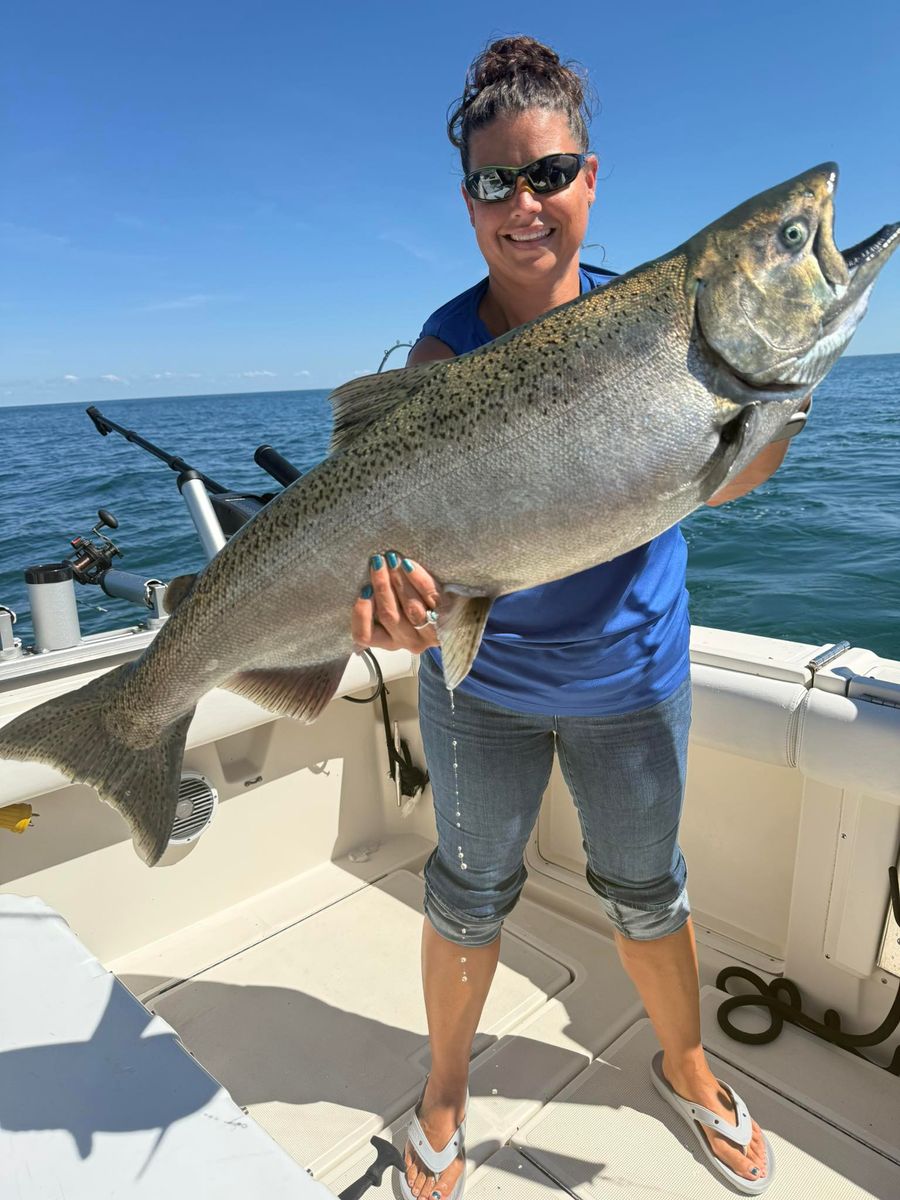
Size is the first clue, though not a perfect one. Chinook, also called king salmon, are the bigger of the two and are built heavier through the body. A mature Chinook can look like a different class of fish next to a Coho. Coho are the smaller, more compact salmon, and they tend to look sleeker.
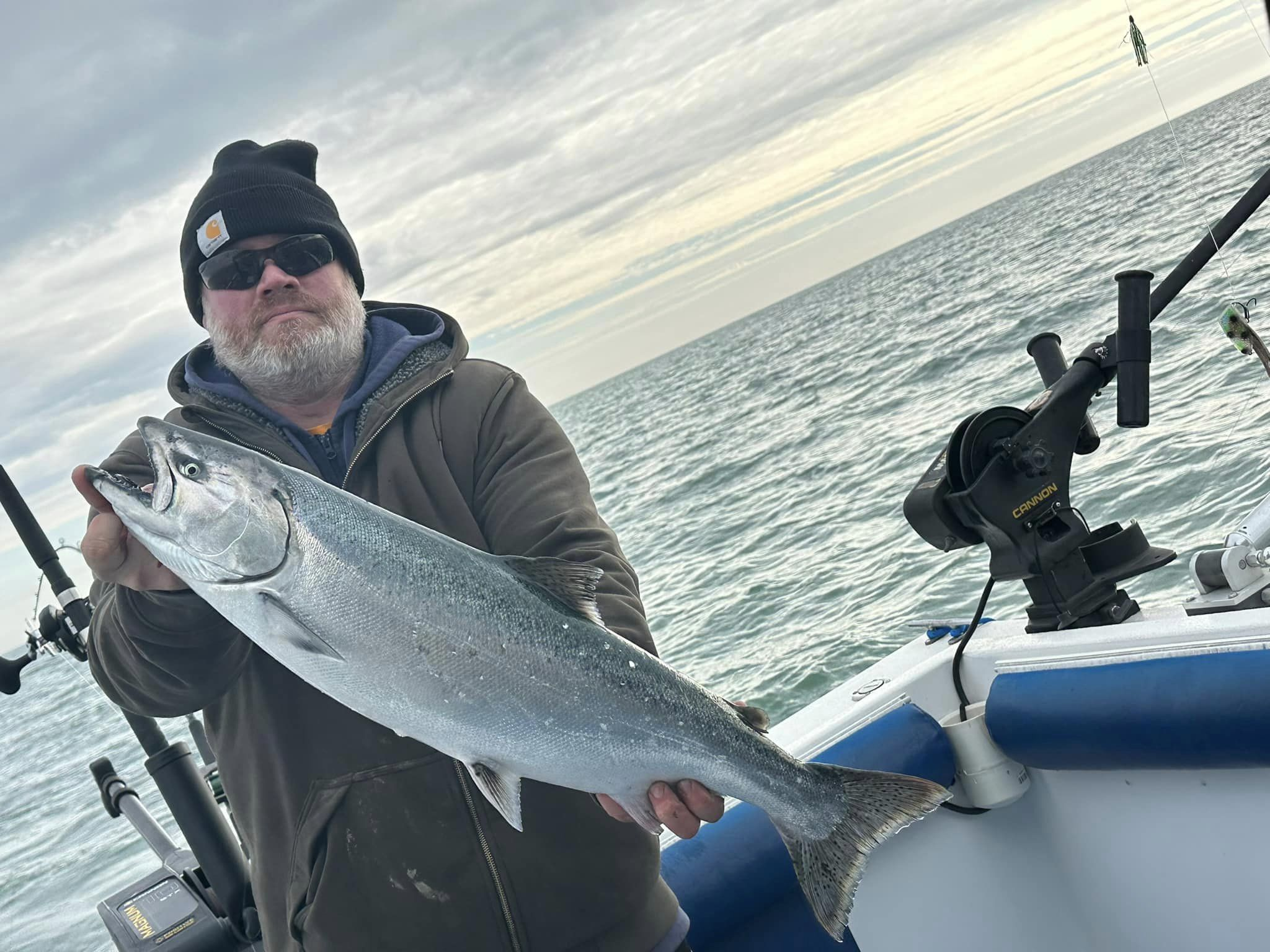
Spotting is the more reliable check. Chinook usually carry black spots across the back and on both lobes of the tail. Coho are typically spotted on the back and only on the upper lobe of the tail. A quick look at the tail is often all it takes to settle an argument on deck.
The mouth gives another hint. Chinook generally have dark gums along the base of the teeth, while Coho often show lighter, grayish gums. Colors also shift with the season and the fish's condition, so lean on spots and tail pattern first and treat color as a supporting detail rather than the deciding factor.
How They Fight
This is where anglers start picking favorites. Chinook are known for raw power. They tend to make long, heavy runs that test the drag and the angler's patience, and a big one can feel like it is simply deciding where it wants to go. If you want the satisfaction of a long, strong battle, a Chinook delivers it.
Coho fight with a different style. They are famous for speed and acrobatics, often running hard and leaping, and they can feel quick and wild on the line. A Coho may not match a Chinook for sheer weight, but many anglers say the energy is hard to beat. Both fish are strong enough that rod handling and a steady hand matter, especially on lighter tackle.
Tackle choice plays into all of this. Light tackle lets you feel more of what a fish is doing, while heavier gear gives you control when a larger fish is on. Captain Gerald matches the setup to the conditions and the target species, so you are not guessing about what to use.
Why Anglers Target Them
Part of the pull is the challenge. Salmon are strong, fast and a little unpredictable, which makes every hookup feel earned. Chinook appeal to anglers who want size and a long fight, and the chance at a trophy fish is a big part of the draw. Coho appeal to anglers who like a lively, energetic fish and a faster pace on the line.
There is also the appeal of the lake itself. Lake Ontario fishing is renowned for its diverse species and abundance, and it suits anglers of all levels. That means a first-timer and a seasoned angler can both have a good day on the same boat, with the captain handling the lake knowledge while you handle the rod.
If you are new to this, you do not need to pick a favorite before you go. Let the day show you which one you like more. Plenty of anglers end up admiring both for different reasons, and the comparison is half the fun.
Planning Your Trip
If this has you thinking about getting out on the water, Rod Benders Sport Fishing offers 8-hour guided trips out of Point Breeze. There are options for different kinds of groups, including a guided family trip, a weekend trip and a trip aimed at more experienced anglers. A full day gives you time to settle into the rhythm of trolling and give the fish a real chance to find your lines.
Which species you connect with depends on the season, so talk it over with Captain Gerald when you book. He can tell you what to expect and help you choose the trip that fits your group. Come ready to learn something, because the best part of fishing with a guide who knows the lake is picking up the small details that make the next trip better.